

 7:55
7:55
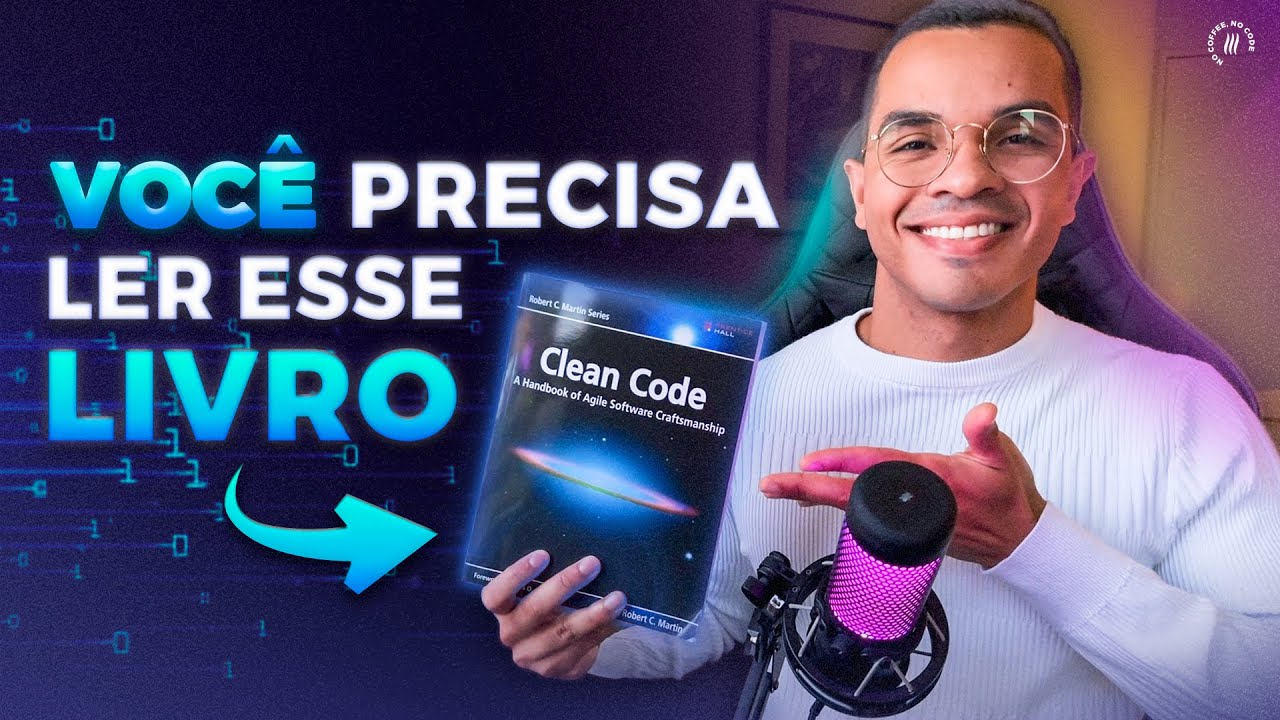
Código Limpo (Clean Code) | Por que todo programador deveria ler?
Coffstack ▶
4:53
▶
4:53
Clean Code - Book Review
Tom Baranowicz
 ▶
24:01
▶
24:01
Como Formatar Código Segundo o Clean Code do Uncle Bob | Capítulo 5 - Resumo
Fort Shield
Leia gratuitamente o trecho disponibilizado pela editora via Google Livros.
Código ruim custa caro. Robert Martin ensina a escrever código limpo, legível e manutenível.
O livro Clean Code, escrito por Robert C. Martin, aborda a importância de escrever código limpo e eficiente. O autor destaca que código mal escrito pode funcionar, mas pode causar problemas significativos para as organizações de desenvolvimento. O livro é dividido em três partes e fornece orientações práticas para melhorar a qualidade do código, incluindo a criação de nomes, funções, objetos e classes bem definidos, além de técnicas de formatação e tratamento de erros.
O livro Clean Code é uma ferramenta essencial para desenvolvedores, engenheiros de software e gerentes de projetos que desejam melhorar a qualidade do seu código. A obra é estruturada em três partes, começando com os princípios básicos de código limpo, seguido de estudos de caso que ilustram como aplicar esses princípios na prática. O livro também aborda tópicos como a importância de nomes significativos, a criação de funções e objetos bem definidos, e como implementar tratamento de erros de forma eficaz. Além disso, o autor fornece dicas práticas para melhorar a legibilidade do código e como realizar testes unitários e desenvolvimento orientado a testes.
- A importância de nomes significativos e descritivos em variáveis e funções
- Técnicas para melhorar a legibilidade do código por meio de formatação e organização
- Como implementar tratamento de erros de forma eficaz sem obscurecer a lógica do código
- A valorização da simplicidade e da clareza no design de funções e objetos
- A prática de testes unitários e desenvolvimento orientado a testes como parte integrante do processo de desenvolvimento
Desenvolvimento de software
Princípios de código limpo
Simplicidade
Clareza
Técnicas de desenvolvimento
Testes unitários
Desenvolvimento orientado a testes
Boas práticas de código
Nomes significativos
Funções bem definidas
Tratamento de erros
Tipos de erros
Técnicas de tratamento de erros
📚 Sobre o Livro
Even bad code can function. But if code isn't clean, it can bring a development organization to its knees. Every year, countless hours and significant resources are lost because of poorly written code. But it doesn't have to be that way.
Noted software expert Robert C. Martin presents a revolutionary paradigm with Clean Code: A Handbook of Agile Software Craftsmanship. Martin has teamed up with his colleagues from Object Mentor to distill their best agile practice of cleaning code "on the fly" into a book that will instill within you the values of a software craftsman and make you a better programmer--but only if you work at it.
What kind of work will you be doing? You'll be reading code--lots of code. And you will be challenged to think about what's right about that code, and what's wrong with it. More importantly, you will be challenged to reassess your professional values and your commitment to your craft.
Clean Code is divided into three parts. The first describes the principles, patterns, and practices of writing clean code. The second part consists of several case studies of increasing complexity. Each case study is an exercise in cleaning up code--of transforming a code base that has some problems into one that is sound and efficient. The third part is the payoff: a single chapter containing a list of heuristics and "smells" gathered while creating the case studies. The result is a knowledge base that describes the way we think when we write, read, and clean code.
Readers will come away from this book understanding
Noted software expert Robert C. Martin presents a revolutionary paradigm with Clean Code: A Handbook of Agile Software Craftsmanship. Martin has teamed up with his colleagues from Object Mentor to distill their best agile practice of cleaning code "on the fly" into a book that will instill within you the values of a software craftsman and make you a better programmer--but only if you work at it.
What kind of work will you be doing? You'll be reading code--lots of code. And you will be challenged to think about what's right about that code, and what's wrong with it. More importantly, you will be challenged to reassess your professional values and your commitment to your craft.
Clean Code is divided into three parts. The first describes the principles, patterns, and practices of writing clean code. The second part consists of several case studies of increasing complexity. Each case study is an exercise in cleaning up code--of transforming a code base that has some problems into one that is sound and efficient. The third part is the payoff: a single chapter containing a list of heuristics and "smells" gathered while creating the case studies. The result is a knowledge base that describes the way we think when we write, read, and clean code.
Readers will come away from this book understanding
- How to tell the difference between good and bad code
- How to write good code and how to transform bad code into good code
- How to create good names, good functions, good objects, and good classes
- How to format code for maximum readability
- How to implement complete error handling without obscuring code logic
- How to unit test and practice test-driven development
🎯 Indicado para: Este livro é indicado para desenvolvedores, engenheiros de software e gerentes de projetos que desejam melhorar a qualidade do seu código e adquirir habilidades em programação limpa e eficiente. É especialmente útil para aqueles que já têm experiência em programação, mas buscam aprimorar suas habilidades em escrever código de alta qualidade. Além disso, é uma ferramenta valiosa para equipes de desenvolvimento que buscam implementar práticas de código limpo em seu processo de trabalho.
💡 O que as Pessoas Aprenderam
💡 Ideias que marcaram
💡 A ideia de que código limpo não é apenas sobre estética, mas sobre funcionalidade e manutenibilidade
💡 A importância de considerar a manutenção a longo prazo do código durante o processo de desenvolvimento
💡 A noção de que a escrita de código é uma forma de comunicação entre desenvolvedores e que, portanto, deve ser clara e concisa
➡️ Mudancas causadas
➡️ Uma mudança na forma como os desenvolvedores abordam a escrita de código, priorizando a clareza e a eficiência
➡️ A adoção de práticas de código limpo como parte do fluxo de trabalho diário
➡️ Uma maior atenção à importância da legibilidade e da manutenibilidade do código em projetos de desenvolvimento de software
O que a Comunidade Acha
Faca login para avaliar este livro.
Nenhuma avaliação ainda. Seja o primeiro!
Livros Relacionados


